01
Real problems first
We start from something a person actually struggles with, not from a feature list. If it will not make someone's day easier, we do not build it.
We build and run our own products — making the most of what tech can do, and putting it to work on the real problems real people have.
What we do
01
We start from something a person actually struggles with, not from a feature list. If it will not make someone's day easier, we do not build it.
02
Technology moves at an enormous pace, and making the most of it is our job. We take the parts that earn their place, and polish the result until we would use it ourselves.
03
Few people, tight feedback, releases measured in days. We keep most of what we plan small enough to actually finish.
What we're building
product_01
Lock it in a box. Get the combination back when the timer ends.
Put the thing you keep reaching for into a box, close a combination lock on it, and hand the combination to the app. It holds on to it until the time you chose is up. There are backup codes for the day you genuinely need it early — spending one costs you the streak, which is rather the point.
 Download on the
App Store
Download on the
App Store
 November on
Google Play
November on
Google Play
What is going in the box, and when it comes out — until a date, once a day or a week, or only when you ask. The app rolls a combination you never have to think up. Then four steps that happen in your hands, at the lock itself.
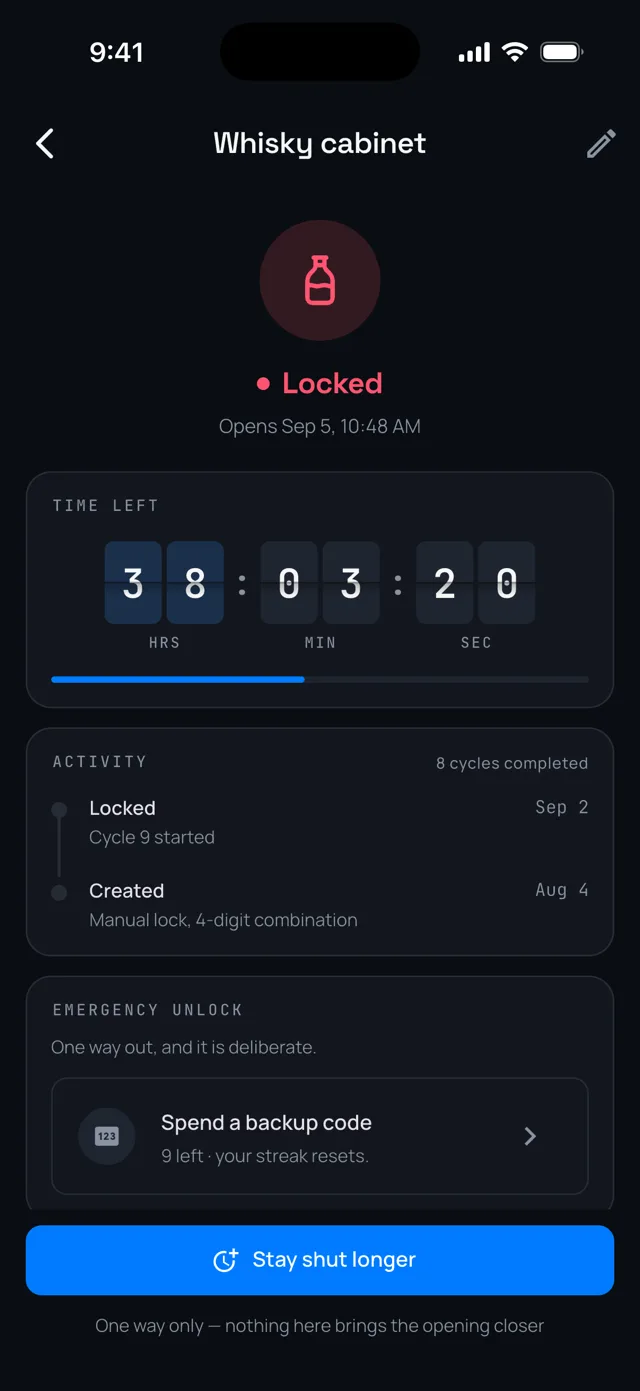
Every lock with a flip-clock countdown and how long it has left, and above them the streak, the hours held and the cycles done. The clocks run on their own — winding the phone forward moves none of them.
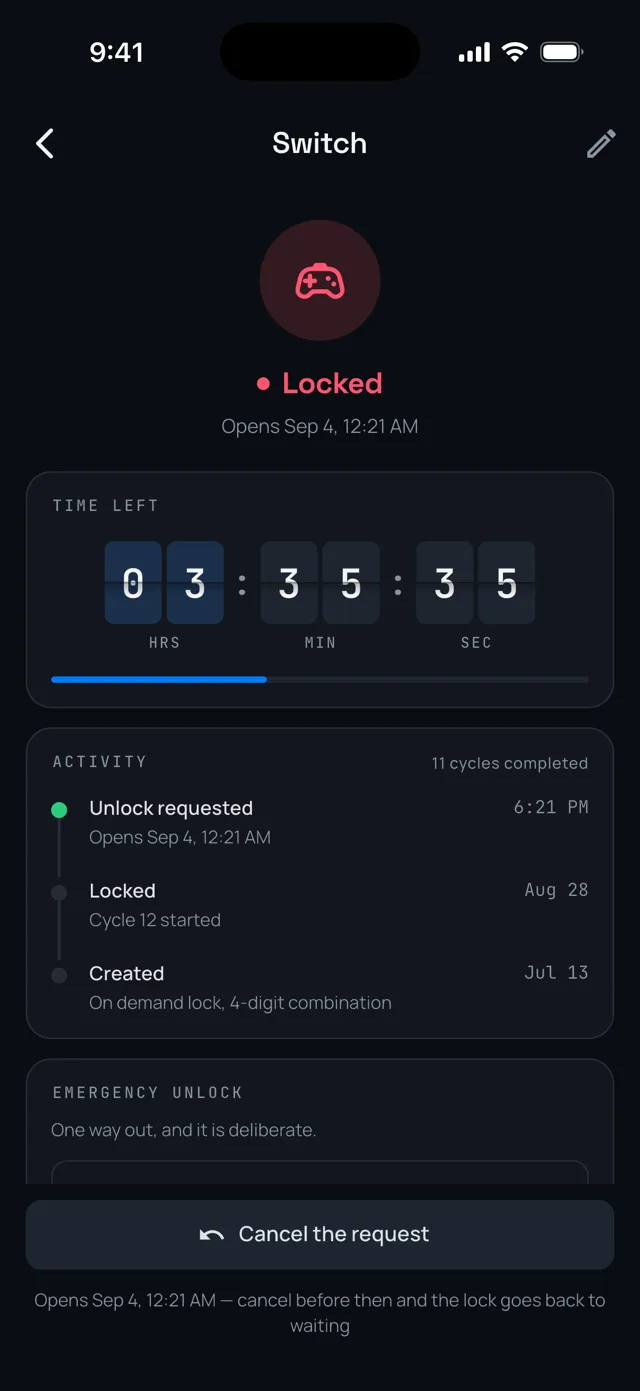
A running lock offers a single change: staying shut longer. Nothing on the screen brings the opening closer, and the one way out is named with its price on it. An on-demand lock waits until you ask, then makes you sit out the delay you chose — the asking can be cancelled, the wait cannot be hurried.
When the timer ends the combination is yours again, held under a press so it is never on screen by accident. Once it has been seen, the next stretch gets fresh digits.
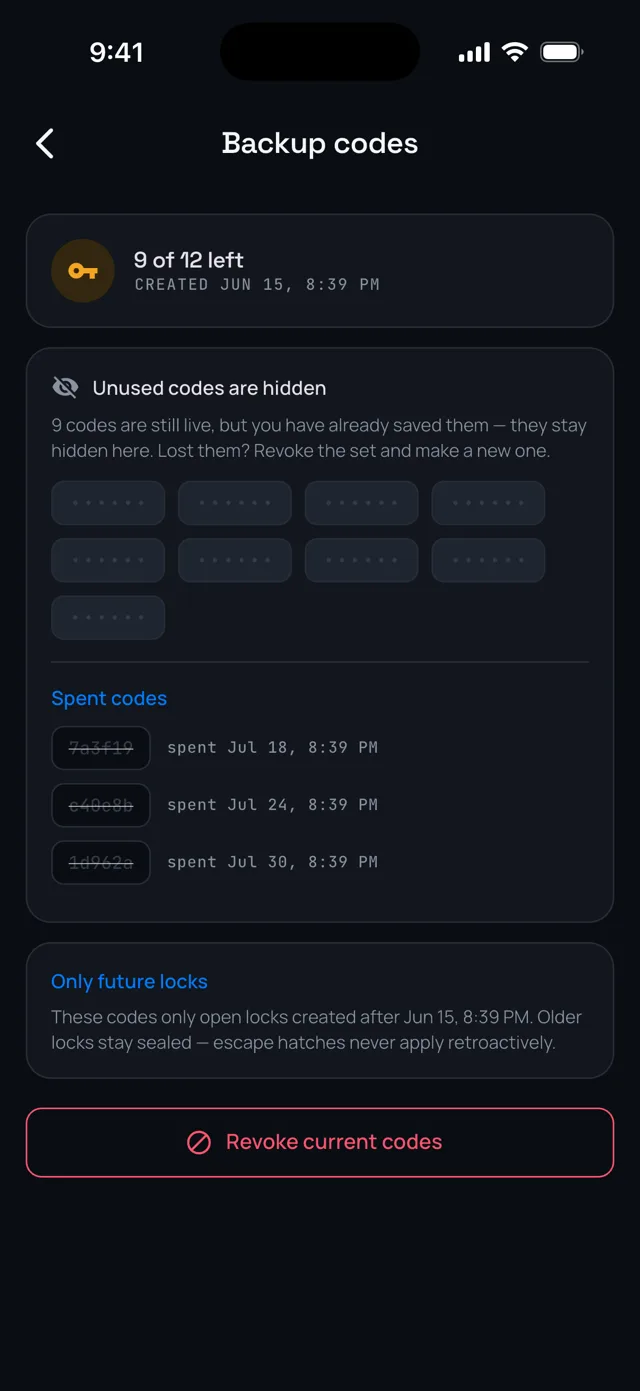
Ten codes you read once, then the app hides them. The ones you spend stay on the record, struck through with the day you used them — and a set only ever opens locks made after it, never the ones before.
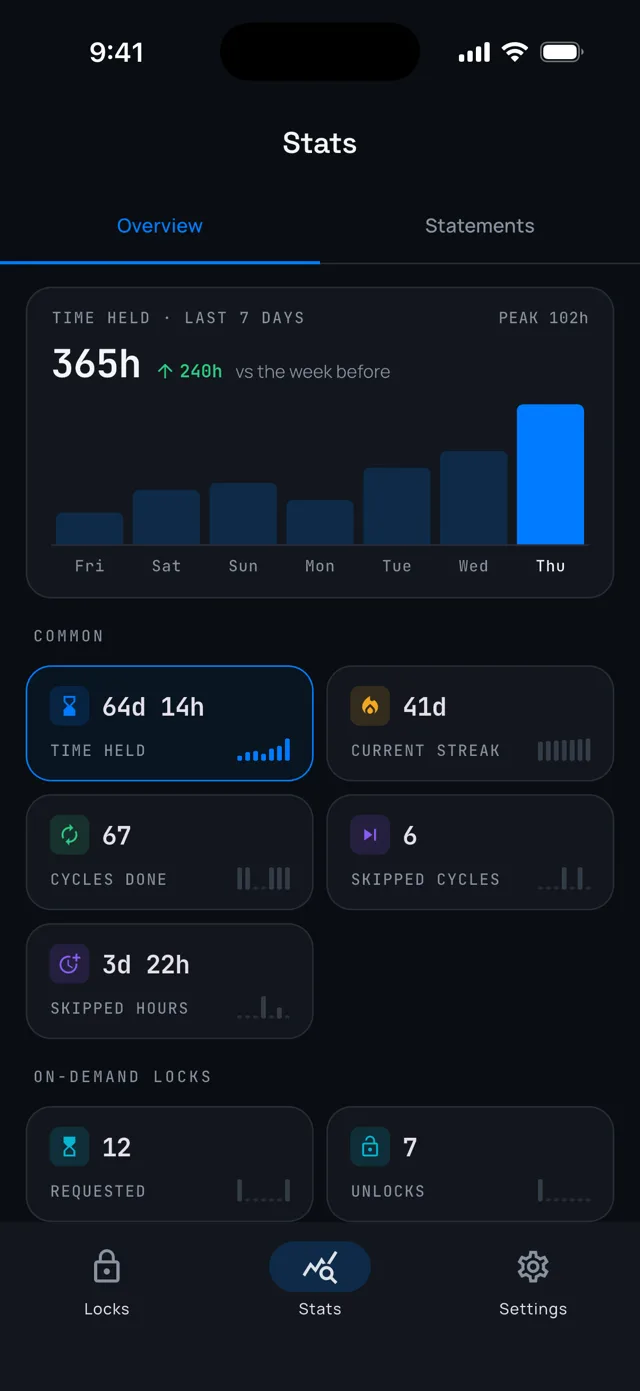
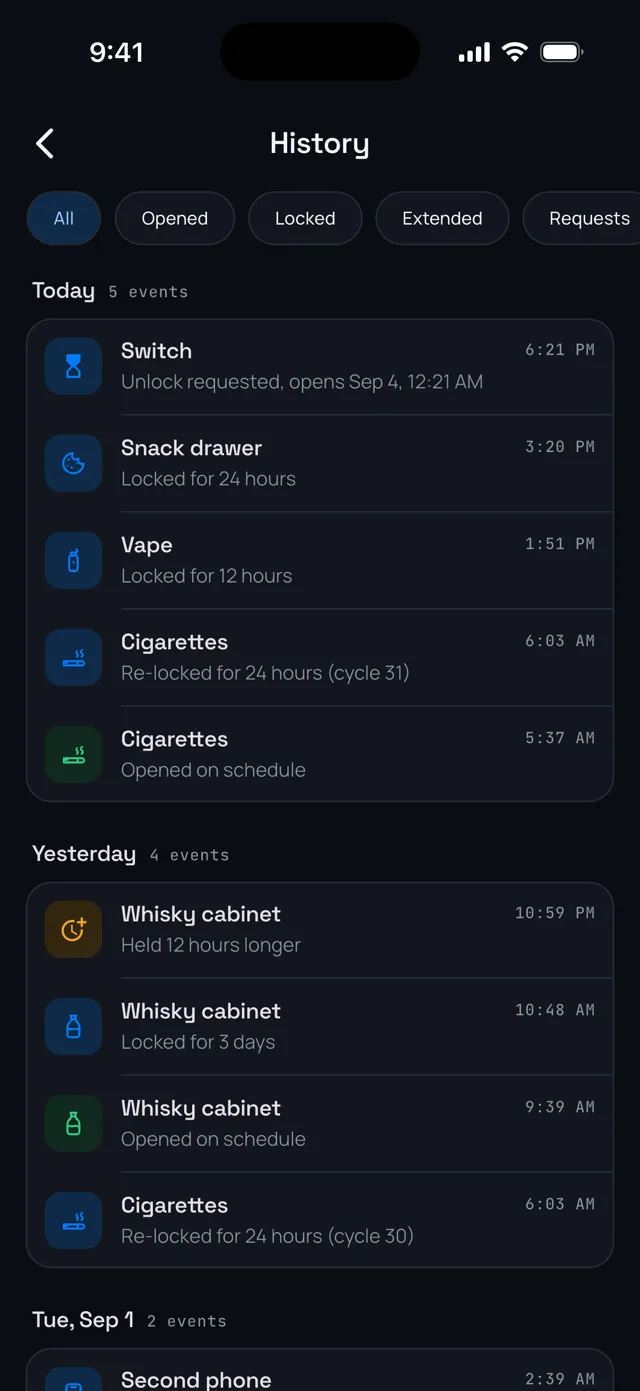
Seven days of time held shut against the week before, then tiles for the streak, the cycles and the hours you skipped. Under them, every lock, opening and code spent, written down in a log you can read back to the day it started.
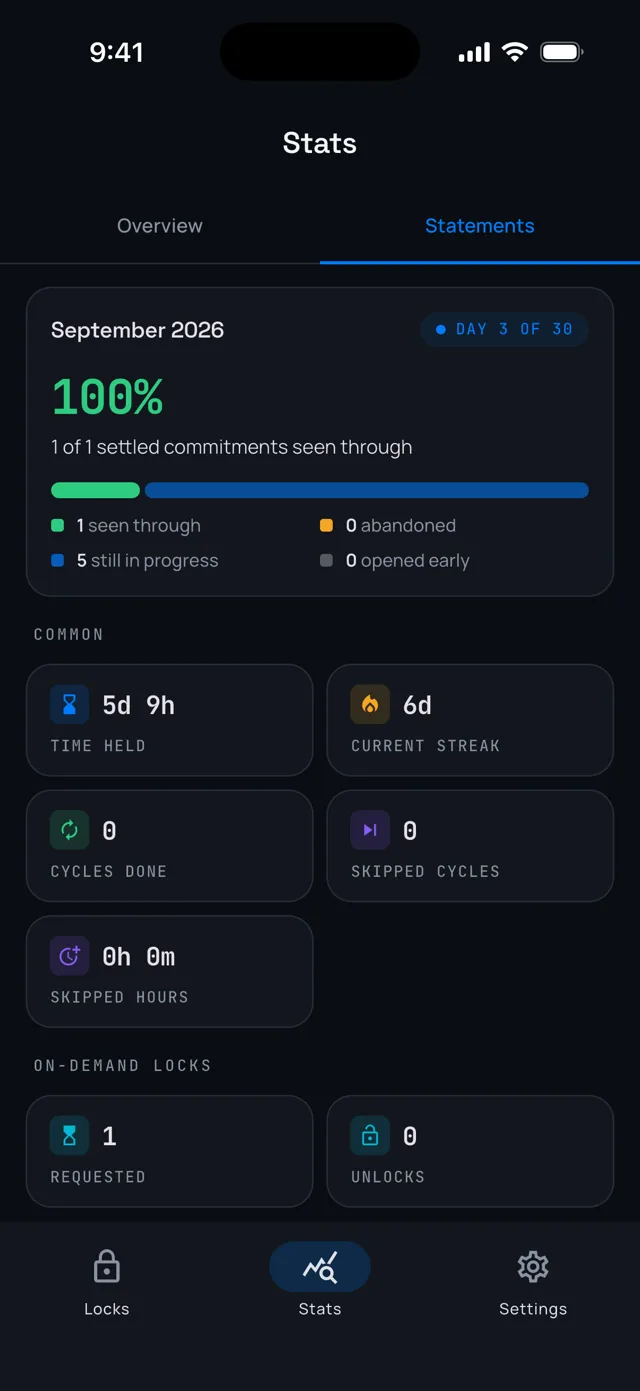
The month so far — what was seen through, what is still running, what was opened early — and every finished month frozen exactly as it stood. A closed one never gets edited, which is what makes it worth showing someone.
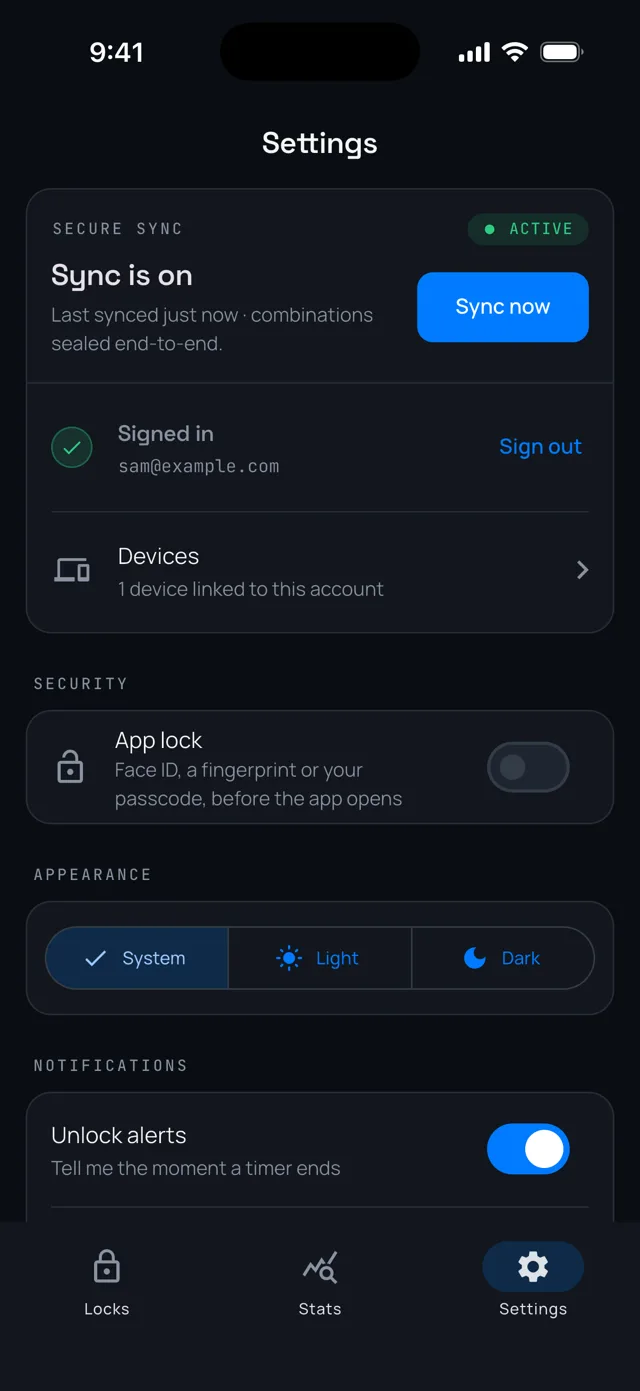
Sync is optional, and the card says exactly what it is doing. Turned on, lock names and combinations are sealed end-to-end before they go anywhere, and a new phone joins only when one that already syncs, or your recovery code, lets it in. Turned off, it says what that costs.
Next up
Partnerships, press, or plain curiosity — send a note and we'll get back to you.
[email protected]